
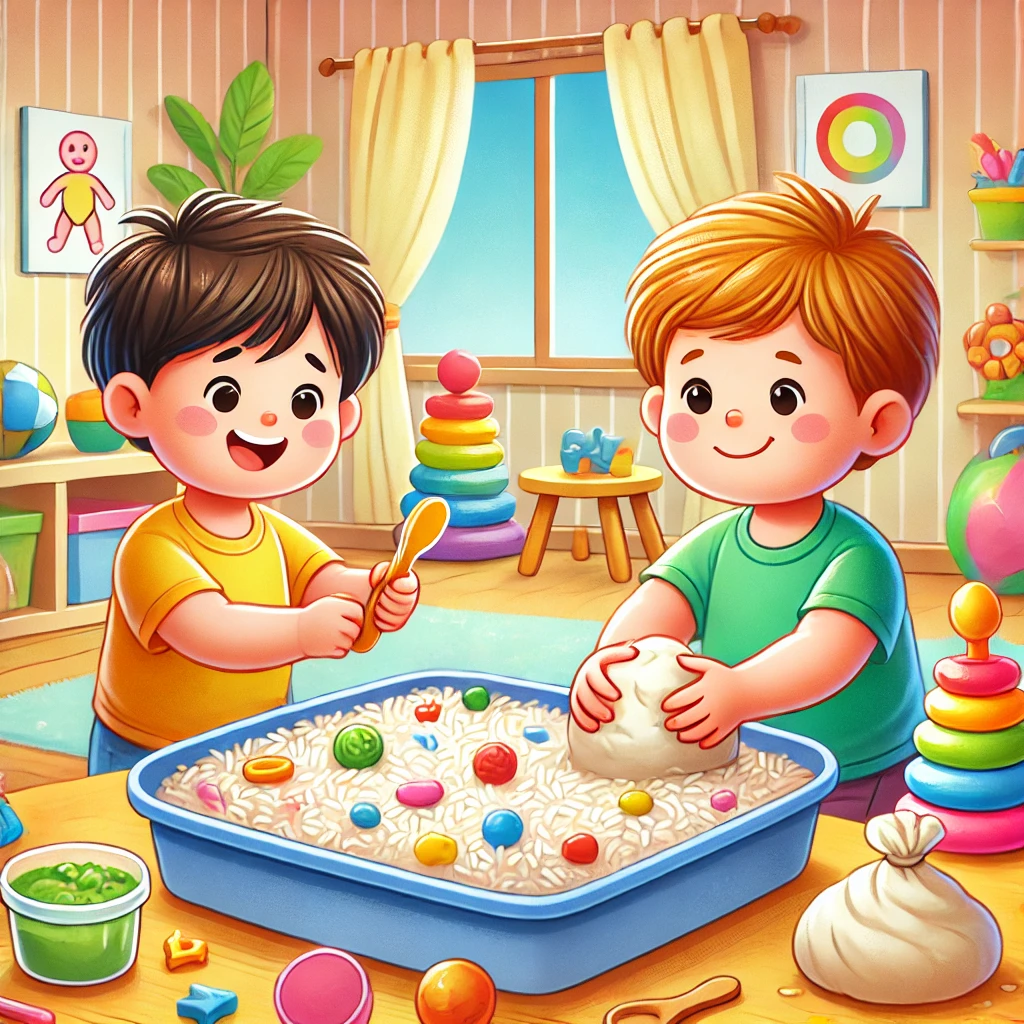
Sensory play is a crucial aspect of early childhood development, allowing toddlers to explore the world through their senses. It plays a fundamental role in cognitive growth, fine and gross motor skills, language acquisition, and social development. By engaging in sensory activities, toddlers build nerve connections in the brain that enhance their ability to complete more complex learning tasks.
Benefits of Sensory Play
- Cognitive Development: Sensory play stimulates problem-solving skills, curiosity, and creativity. Activities that involve different textures, sounds, and scents encourage toddlers to make connections and develop critical thinking.
- Motor Skills Development: Engaging in sensory activities such as playing with clay or water helps strengthen fine motor skills by improving finger dexterity and hand-eye coordination. Gross motor skills are enhanced through activities like jumping, balancing, or splashing in water.
- Language and Communication Skills: As toddlers describe their sensory experiences, they learn new vocabulary and improve their communication skills. Asking questions and engaging in discussions about the sensory activity supports language development.
- Emotional Regulation and Social Skills: Sensory play can have a calming effect on toddlers, helping them manage emotions and reduce anxiety. Group sensory activities promote cooperation, sharing, and social interaction with peers and caregivers.
- Encourages Independent Exploration: Through sensory play, toddlers learn to engage independently with their environment, fostering confidence and a love for learning.
Types of Sensory Play
- Tactile Play: Engages the sense of touch (e.g., playing with sand, water, playdough, or rice bins).
- Auditory Play: Focuses on the sense of hearing (e.g., listening to different sounds, playing with musical instruments).
- Visual Play: Enhances sight recognition (e.g., exploring bright colors, light tables, and picture matching games).
- Olfactory and Gustatory Play: Involves the senses of smell and taste (e.g., exploring scented playdough, tasting different fruits).
- Movement-Based Play: Encourages physical movement (e.g., obstacle courses, swinging, balancing on beams).
Practical Tips for Incorporating Sensory Play into Daily Routines
- Mealtime Sensory Exploration: Allow toddlers to feel, smell, and taste different food textures.
- Outdoor Nature Walks: Encourage touching leaves, smelling flowers, and listening to birds.
- Bath Time Play: Use water toys, bubbles, or colored bath tablets for a sensory experience.
- Household Items for Sensory Play: Rice bins, pasta, beans, or flour provide great sensory stimulation.
- Interactive Storytelling: Use textured books or hand movements to engage different senses.
Step-by-Step Guides for Sensory Play Activities
1. DIY Sensory Bin
Objective: Enhances fine motor skills, cognitive exploration, and problem-solving.
Resources Needed:
- A large plastic bin
- Uncooked rice, dried beans, or pasta
- Small scoops, cups, and toy figures
- Optional: Essential oils for scent, colorful objects for visual stimulation
Steps:
- Fill the plastic bin with the base material (rice, beans, or pasta).
- Add small scoops, cups, and toys to encourage exploration.
- Introduce scents by adding a few drops of essential oil to the base.
- Encourage the toddler to scoop, pour, and sort objects.
- Discuss the colors, textures, and shapes to enhance learning.
2. Homemade Playdough Sensory Activity
Objective: Encourages fine motor skill development, creativity, and tactile exploration.
Resources Needed:
- 2 cups flour
- 1 cup salt
- 1 tablespoon vegetable oil
- 1 cup water
- Food coloring (optional)
- Essential oils (optional for scent)
Steps:
- Mix flour and salt in a large bowl.
- Add vegetable oil and water gradually, stirring until dough forms.
- Knead the dough until smooth and pliable.
- Separate into portions and add different food colorings.
- Add essential oils for a multisensory experience.
- Let toddlers squish, roll, and mold the playdough into shapes.
- Engage in discussions about textures and colors.
By incorporating sensory play into daily activities, parents and caregivers can support holistic toddler development while making learning fun and engaging.
